




The Chronograph Watch
The term chronograph comes from the Greek words chronos and graph, meaning “time writing,” or the recording of time. From split-seconds to “standard” chronographs, these mechanical timepieces have historically served many needs of their owners. The earliest chronographs were used to time horse races and other contests. Today, chronographs measuring elapsed time are used to measure speed, distance, heart rate and more.
How the chronograph complication works
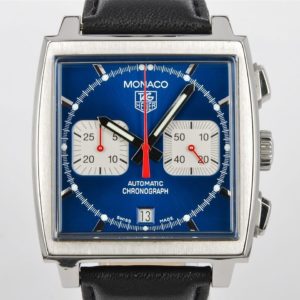
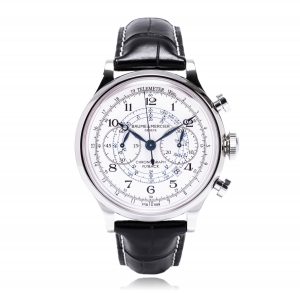
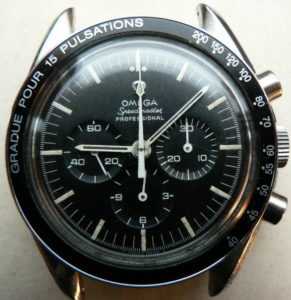
Chronographs measure specific intervals of elapsed time on command, much as a stopwatch or timer would. However, unlike stopwatches and timers, they can be started, stopped and reset while the watch keeps running in real time. For example, a chronograph could time a run around the track and simultaneously display the current time. A chronograph usually has one or two pushers (buttons) on the right side of the watch case for each function of Start, Stop and Reset. When the pusher is depressed, the chronograph begins to measure elapsed time. Depending on the type of chronograph, the time will be measured in increments of a second, tenth of a second or even 1/100 of a second in some cases. When the pusher is pressed again, the chronograph stops, displaying the elapsed time. A second button resets the chronograph back to zero.
History of the chronograph
While for many years, it was believed that Nicholas Rieussac invented the chronograph in 1821, that record changed when Louis Moinet was declared the inventor in 2013, having created his watch in 1816. He invented his timing watch to aid in charting the movements of the planets and stars across the sky, essential to sailors for determining their longitudinal position.
Reussiac did, however, produce the first commercially available chronograph. He was commissioned by King Louis XVIII, who loved horse racing, to create an instrument that could record the exact time of a race.